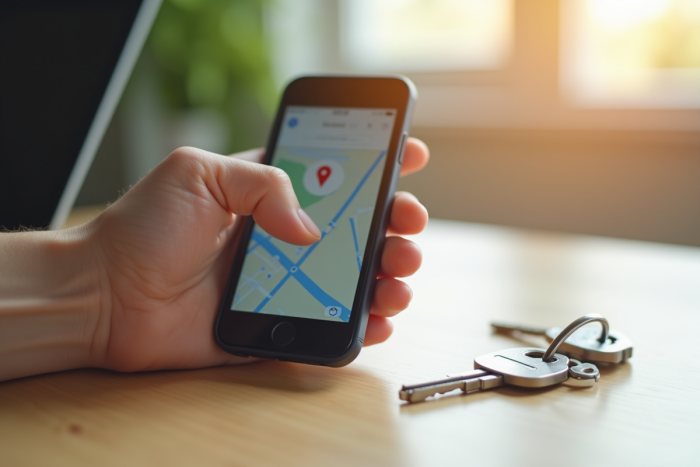
In 2023, more than 30 million smart trackers were sold worldwide, according to reports from major manufacturers. Despite rapid adoption, some healthcare facilities have observed difficulties in integrating these devices into their daily organization. Insurance companies are now offering discounts on home insurance for households equipped with connected location systems. The rise of these technologies raises new issues surrounding personal data management and user security.
Connected objects: a discreet revolution in our daily lives
Little by little, connected objects and new technologies have made their way into our routines, quietly changing the way we manage lost items. Thanks to connected tags and Bluetooth technology, finding your keys or bag becomes child’s play. Demand remains strong: Laurent Darrieutort, head of Fnac Darty, mentions a 30% increase year-on-year for these tags. This enthusiasm is no coincidence.
GPS trackers and NFC connected tags have carved out a prime spot in the vast universe of the smart home. For example, Sergueï Leroux locates his backpack without using a cellular network, simply with a GPS tracker. The NFC tag allows for contactless reading and, above all, ensures discretion: the owner remains anonymous. Many praise these advancements, which finally prioritize data privacy in an era where digital surveillance is infiltrating everywhere.
QR codes are not left behind: they can now be found on suitcases, phones, or keys, creating a direct link between the lost item and the person who finds it. In airports, artificial intelligence takes over: automated sorting, alerts, image recognition, the recovery of lost items is speeding up. Here, innovation operates, discreetly but determinedly, to lighten the management of daily life.
In this changing sector, Rabbit Finder has risen to the rank of reference. Speed of action and reliability are what most often come up in user testimonials. When efficiency becomes a standard, word of mouth does the rest.

Practical life, health, home: how technology simplifies the management of lost items
Every year in France, 35 million items go missing. A wallet hastily slipped away, glasses forgotten on a terrace, a phone lost in the crowd of a shopping center: the scene repeats endlessly. Yet, barely 2.5% of items found are returned to their owners. This gap speaks volumes about the need to renew the management of lost items, at a time when our lives are constantly accelerating.
QR codes have established themselves as bridges between the physical and digital worlds. Kadiatou Traoré sums it up well: “Scanning a code, contacting the owner, it’s simple and immediate.” This speed changes the game. The lost and found services are evolving too: integrating a photo into the report increases the chances of recovering an item by half. Now, data recovery and compatibility with various operating systems open new horizons for everyone.
Here’s what these innovations concretely bring:
- Peace of mind: fewer tedious procedures, unprecedented responsiveness.
- Data protection: anonymity remains the rule thanks to smart tags.
- Constantly evolving digital: solutions designed for home life, health, or travel.
The overall value of lost items in France reaches 5 billion euros each year. Behind this figure lies much more than material goods: memories, work tools, even medical treatments. Technology, slipped into pockets or stuck on suitcases, radically changes our relationship with loss and restitution. Quietly, but with an effectiveness that leaves no one indifferent.