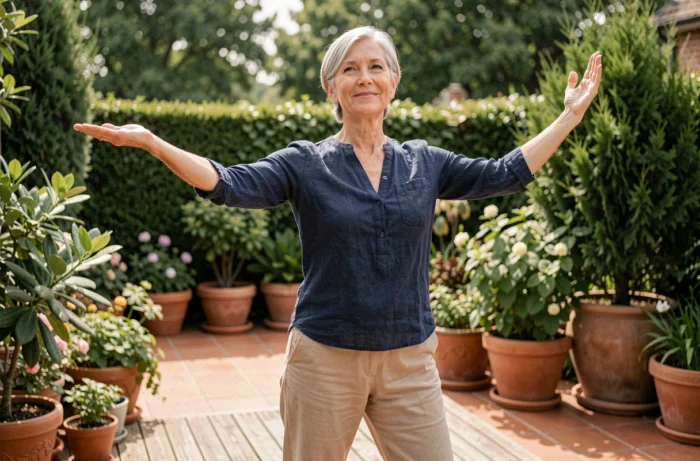
Ageing well means maintaining physical, cognitive and social abilities for long enough to remain independent in everyday activities. In France, at age 65, women can expect to live a further 11.8 years without disability, and men 10.5 years, according to 2024 data published by DREES. The key to ageing well lies less in lifespan than in the quality of those years.
Fall prevention for older adults: an underestimated risk
Falls are the leading cause of fatal accidents at home among people over 65. An analysis by Santé publique France covering the period from 2015 to 2024 found that age-standardised hospitalisation and mortality rates related to falls rose between 2019 and 2024, with notable differences between regions and a winter peak.
This goes beyond the simple effects of an ageing population. Falls are increasing even when age structure is comparable, pointing to modifiable factors such as increased sedentary behaviour, poorly adjusted medication and unsuitable home environments.
After any fall, the French National Authority for Health recommends a comprehensive assessment. Making the home safer is not enough: personal causes must also be investigated. These include the risk factors related to balance, vision, hearing and nutrition covered in these tips for older adults from Santé Bien-Être.
- Have your vision and hearing checked every year. The gradual decline of these two senses often goes unnoticed and can affect postural stability.
- Ask your doctor to review your current medications, especially those that cause drowsiness or dizziness (sleeping pills, antihypertensives, anti-anxiety medication).
- Do muscle-strengthening and balance exercises at least twice a week, even at a low intensity.
Adapted physical activity: maintaining muscle mass and balance
Muscle mass naturally decreases with age. This process, known as sarcopenia, accelerates the loss of independence if it is not countered with regular exercise. Strengthening the muscles in the lower limbs directly helps prevent falls and makes everyday tasks easier: getting up from a chair, climbing stairs and carrying a shopping bag.
Adapted physical activity is not limited to walking. Balance exercises (standing on one foot, tai chi, movement courses) engage the vestibular system and postural reflexes. Combining strength and balance exercises reduces the risk of falling far more than walking alone.
Consistency matters more than intensity. Two to three 30-minute sessions a week produce measurable improvements in strength and stability. Several pension funds offer group classes led by professionals, available free of charge or at a reduced rate.
Nutrition and protein intake after 65
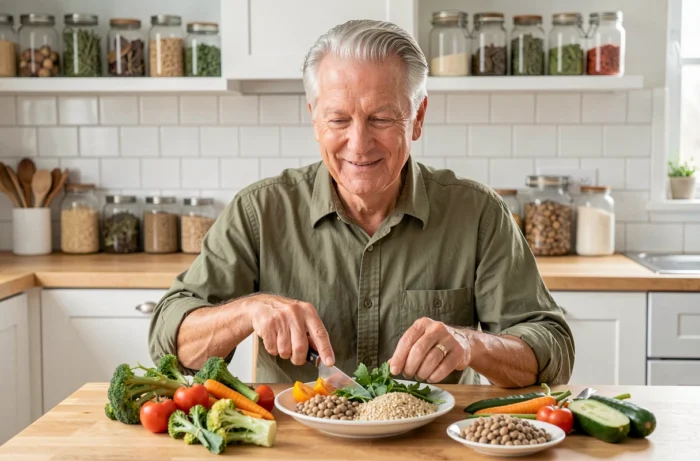
Diet also plays a role in combating sarcopenia. Protein requirements increase with age, while appetite and the ability to absorb nutrients decline. Spreading protein intake across all three meals, rather than concentrating it at dinner, supports better muscle synthesis.
Hydration remains a critical issue that is often overlooked. The sensation of thirst diminishes with age, increasing the risk of chronic dehydration, which can cause confusion, fatigue and falls.
Adapting the home for ageing: a practical way to maintain independence
Most older adults want to age at home. Adapting the home is a form of prevention in its own right, not just a response to an established loss of independence.
Priority adaptations focus on three areas: the bathroom (a level-access shower, grab bars), the stairs (a handrail, automatic lighting, non-slip flooring) and the bedroom (a bed at the right height, a night-time pathway light). These simple changes can significantly reduce the risk of falls at home.
Since 1 January 2025, the Service public départemental de l’autonomie (SPDA), established by the law of 8 April 2024 on ageing well, has aimed to make it easier to access information, guidance and coordinated support. Its rollout is still progressing at different rates across regions, but it provides a point of contact for finding out about available financial assistance.

Cognitive stimulation and social connection: two often-overlooked safeguards
Maintaining cognitive abilities is not just about memory exercises. Regular social interaction stimulates the brain as much as structured cognitive training. Taking part in a community activity, having an in-depth conversation or learning a new skill engages attention, language and working memory at the same time.
Social isolation, by contrast, accelerates cognitive decline and worsens mood disorders. The ICOPE programme, led by the World Health Organization and supported in France by Assurance retraite, assesses functional abilities (mobility, memory, vision, hearing and psychological well-being) to identify early warning signs.
Sleep and mental health in older adults
Sleep naturally changes with age: sleep cycles become shorter and night-time awakenings more frequent. These changes are normal, but chronically disrupted sleep weakens the immune system, impairs memory consolidation and affects mood regulation.
Keeping regular bedtimes and wake-up times, limiting naps to 20 minutes and avoiding bright screens in the evening are effective adjustments. Sleeping pills should be used only occasionally, as they increase the risk of night-time falls and confusion.
Ageing well depends on combining practical steps rather than making a radical lifestyle change. Preventing falls, maintaining muscle mass, gradually adapting the home and preserving social connections all work together. The SPDA, currently being rolled out across the country, provides a starting point for finding locally available support and services.