Less than a thousand experts work behind the scenes to keep French rail logistics running. Their profession, far from university amphitheaters, is learned on the ground, in direct contact with machines and tracks. This practical school demands a rare versatility and an ability to adapt to any situation.
In the face of the rise of rail freight and the introduction of increasingly strict safety standards, the demand for these professionals continues to grow. Technology is becoming part of their missions, requiring constant skill enhancement, but without ever easing the level of demand or the weight of responsibility.
Wagonist: an unknown profession at the heart of rail transport
In the rail logistics chain, the wagonist remains in the shadows, discreet yet indispensable. Their mission: to streamline traffic and ensure the safety of an entire sector. The profession of wagonist encompasses the majority of maintenance and control operations, in a professional environment subject to rhythms and technical unforeseen events.
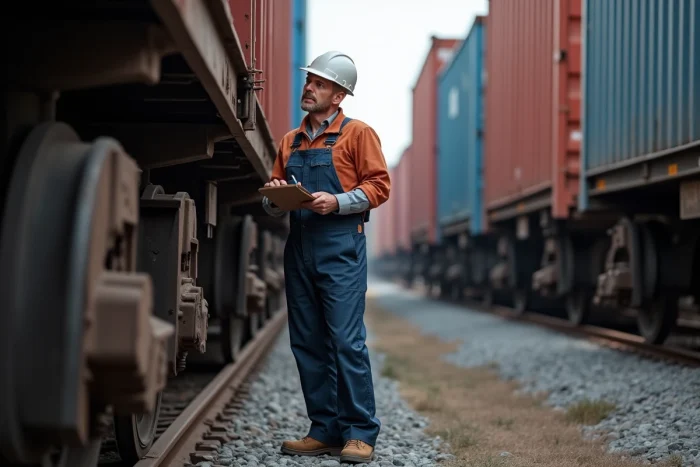
On the ground, this specialist oversees every train. A suspicious brake? They intervene without delay. A delicate coupling operation? They analyze, adjust, secure. It is impossible to reduce the wagonist job description to a simple job sheet: their technical know-how, vigilance, and mastery of safety protocols make them a key link in the rail system.
In workshops or along the tracks, they collaborate with drivers, yard agents, and logistics personnel. Spotting a defect, anticipating an incident, communicating to facilitate traffic: this is the daily life of this profession. From visual inspection to mechanical intervention, safety guides each of their actions. For those who wish to delve into the details, the resource “The profession of wagonist” sheds light on the skills needed to excel in this field.
As the rail sector transforms, these professionals become essential to absorb technical changes and ensure traffic continuity. Being a wagonist means choosing the discretion of efficiency, expertise in service of the collective.
What missions and skills distinguish this professional on a daily basis?
The wagonist stands out for the range of their technical and logistical interventions. Each day brings them to orchestrate the main wagonist missions, which guarantee the reliability of rail transport.
Coupling, uncoupling, checking equipment compliance, inspecting each component, diagnosing braking systems: nothing escapes their trained eye. This is a profession without routine, where each operation can become a technical or safety challenge.
Preventive maintenance is at the heart of their practice. Precision, anticipation, attention to detail: they work on industrial equipment and comply with safety standards, all while integrating new technologies that constantly disrupt habits.
Technical skills and soft skills
Here are the expected abilities to perform this job effectively:
- Mastery of industrial maintenance and the ability to spot an anomaly in the blink of an eye
- Experience in coupling and uncoupling operations, confidently handling complex systems
- In-depth knowledge of safety standards and operational procedures
- Reactivity and stress management in the face of the daily challenges of the profession
Team spirit, autonomy, rigor, and sustained vigilance complete this set. The sector is evolving, procedures are changing, and the wagonist must constantly expand their skill set. Adaptability is not an option; it is a necessity.

Future prospects: why choose a career as a wagonist today?
At the heart of the rail sector, the wagonist profession is taking on a strategic turn. Modernization of infrastructure, integration of new technologies, heightened safety requirements: the profession is evolving and renewing itself. Companies are now seeking profiles capable of understanding complex systems, absorbing new standards, and ensuring the maintenance of specialized wagons, particularly in the transport of hazardous materials.
The wagonist training pathway is accessible to those with a CAP in equipment maintenance, a professional baccalaureate in industrial equipment maintenance, or a BTS in the sector. This foundational training allows for advancement through continuous education and the rapid integration of sector technological innovations.
Possible professional developments
Several paths open up for those looking to advance their careers:
- Access to team leadership, with the role of maintenance team leader
- Specialization in advanced braking systems or in wagons dedicated to specific missions
- Broaden their scope of action by integrating transversal missions related to the wagonist professional environment
In light of the retirement of older workers and the revival of the industrial sector, the prospects for advancement are plentiful. The sector seeks technical profiles, precise, motivated by challenge and diversity. Careers in rolling stock maintenance are open to those who can combine curiosity, rigor, and a taste for the concrete.
As trains become more sophisticated, the wagonist remains the vigilant guardian of a rolling heritage, ready to support every advancement of the French rail system.