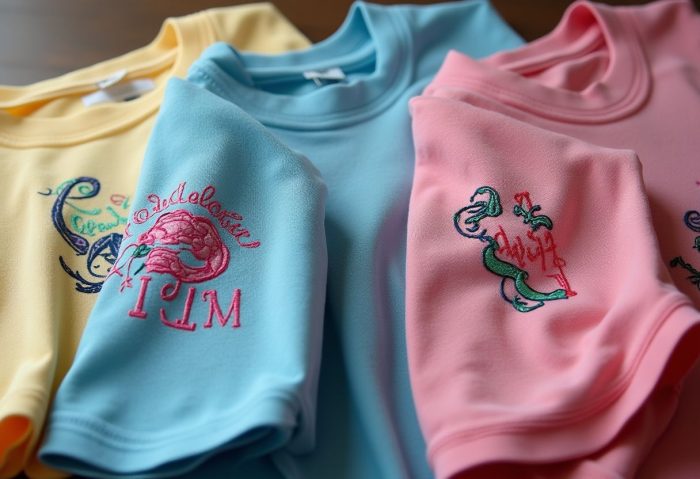
When it comes to customizing a t-shirt, the choice of printing technique can have a major impact on the final result. Between flocking and embroidery, each method has distinct characteristics that influence not only the aesthetics but also the durability and feel. Therefore, it is essential to understand these differences to make an informed choice. This article explores in detail the specifics of these two techniques to guide you in your decision.
The Specifics of Flocking
Flocking is a popular printing technique due to its unique visual appearance and its ability to produce vibrant designs. Its particularity lies in the application of a heat-activated film on the fabric, giving the patterns a smooth and slightly raised finish. This process is often favored for designs with sharp contours and bright colors.
- Visual Appearance: Flocking stands out with a shiny finish and bold colors that immediately catch the eye. The shades obtained are often more vivid than those of other techniques.
- Durability: Although it offers good resistance to wear, flocking can be prone to cracking or peeling after several washes if care instructions are not strictly followed.
- Feel: Flocking provides a soft and velvety touch, adding a pleasant tactile dimension to the patterns.
- Limitations: This method is less suitable for very detailed designs or patterns featuring many color gradients.
The Sophistication of Embroidery
Embroidery, synonymous with elegance and tradition, adds a different dimension to textile customization. It involves stitching threads directly onto the fabric, creating raised patterns that evoke artisanal craftsmanship. Its durability and timeless aesthetics make it a favored option for quality garments.
- Aesthetics: Embroidery offers a chic and refined look. The patterns are often more subtle but convey a high-end impression.
- Resistance: Embroidered patterns withstand washing and wear well, maintaining their integrity over time. It is a durable solution that is perfectly suited for frequently used items.
- Tactile Effect: The raised effect of embroidery provides a unique sensation to the touch, adding depth and character to the design.
- Constraints: Embroidery is less suitable for very large patterns or those requiring a wide color palette, as each color involves a thread change.

Choosing the Best Technique for Your Customized T-Shirt
When it comes to selecting the appropriate technique for your customized t-shirt, several factors must be considered. Aesthetic preferences, frequency of use, and budget can influence this choice.
In terms of cost, flocking is generally less expensive than embroidery, which can be a decisive criterion for mass production or low-budget projects. However, if longevity and an elegant appearance are prioritized, embroidery may prove to be the most sensible option. Finally, the style of the intended design can also play a role in the selection of the technique.
Customizing clothing is a true expression of self, and choosing between flocking and embroidery is about determining the message one wishes to convey through their attire. Visual appearance, tactile sensation, and durability are all factors to consider. Whether you opt for the brilliance of flocking or the elegance of embroidery, each method brings a distinct touch, shaping the unique character of your t-shirt.