The World Health Organization does not mince words: nearly one in two people in the world does not have access to the health services they need. Yet, a large part of chronic diseases could be prevented, or at least delayed, simply through a better understanding of health issues and some solid guidelines.
Disparities are widening, despite the abundance of prevention campaigns and the plethora of educational resources. Some schools manage to instill real behavior changes; elsewhere, progress remains timid, as if information struggles to break through certain walls.
The major challenges of health education worldwide: current observations and issues
The notion of prevention directly targets risk factors. Campaigns, access to emergency contraception, screening, preventive treatments for HIV, support for the most vulnerable populations: on the ground, the offerings are diversifying, but many people remain excluded. The result: inequalities are intensifying on a large scale. Health promotion goes further: it aims to develop skills, support choices, and focus on autonomy. But in practice, this promise remains unevenly shared between countries and within territories.
The World Health Organization supports a health education envisioned as a pathway to greater empowerment. Access to information, level of education, local political engagement: the possibilities for action largely depend on the context. For everyone to become an actor in their own health, information must remain readable, accessible, adapted, and not reserved for a select few. This requires a shift from a static transmission to genuine citizen participation, where voices circulate.
Among the priority areas: the affective and sexual life of adolescents, support for at-risk groups, and the transformation of educational tools. In France, national ambitions promise access to prevention for all, but disparities persist. In this dynamic, the Santéducation website provides content and analyses to shed light on choices, read between the lines of public policies, and equip everyone with a critical framework for understanding health information.
How schools and awareness transform access to health for all
At school, transmitting knowledge is no longer enough. It is about shaping behaviors, establishing lasting reflexes, and supporting each young person to grasp the stakes of their choices. Prevention and health education are no longer supplements: they are embedded in curricula, structure interactions, and encourage collective or individual action. What matters is building students’ psychosocial skills, making them autonomous, capable of questioning, choosing, and acting.
In practice, workshops, debates on social norms, and reflections on stereotypes bring about a real shift: everyone can revisit their habits, discover new benchmarks, and question assumptions. In the face of inequalities and real dangers from a young age, the entire educational community must invest. The goal is clear: to enable each student to read health information, react to it, and make informed decisions.
Participating in an awareness project, getting involved in a campaign, accessing specific workshops at school: this is how the notion of responsibility takes root. Health ceases to be a top-down discourse. It becomes a shared project. In France, schools are now transforming into spaces of experience, where each journey is tailored to individual needs.
From lifestyle habits to educational resources: concrete levers to improve well-being
Health education relies on tangible levers, directly connected to daily reality. At the top of the list are lifestyle habits: diet, physical activity, hygiene, stress management. They condition each person’s balance and ability to act.
Here are the main elements involved in most approaches:
- diet,
- physical activity,
- hygiene,
- stress management
This foundation remains fragile as long as not everyone has equal access. Educational resources, disseminated by institutions and supported by campaigns, aim to target the most widespread dangers: tobacco use, alcohol consumption, dietary imbalances, risky behaviors.
In the face of the complexity of daily life, prevention takes multiple paths. Individual consultations in specialized centers (planning, family education, prevention) offer personalized listening and support: emergency contraception, abortion, screenings, access to PrEP or PEP. People seek concrete solutions tailored to each situation to make informed decisions.
As for the collective, it retains an irreplaceable role. Group workshops, exchanges, large-scale projects: these experiences create connections and open up new reflexes. Participating, sharing experiences contributes to changing behaviors. Pooling experiences changes the game.
To clarify these levers, three axes frequently appear in effective strategies:
- Nutrition: establishing benchmarks for healthy eating, tailored to each individual.
- Healthy living: integrating daily rituals to preserve health.
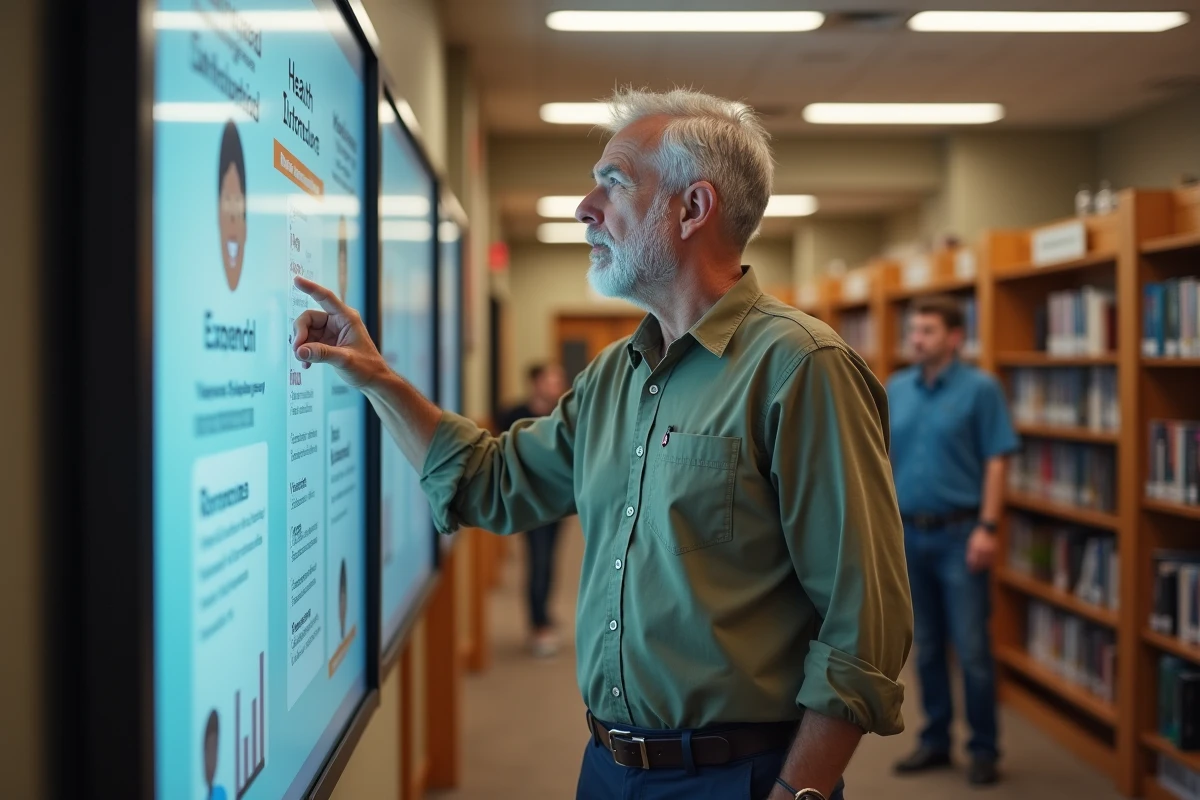
- Access to information: knowing how and where to find information, and distinguishing reliable sources.
When prevention and education move forward together, health takes shape and embodies itself in reality. There is no one-size-fits-all solution, only avenues to explore, an invitation to take charge of one’s health, starting today.