
On the same journey on a TGV INOUI, the price difference between a second-class ticket and a first-class ticket varies greatly depending on the booking date, occupancy rate, and the type of fare chosen. This differential, far from being fixed, depends on the yield management applied by SNCF, which adjusts prices in real time. Understanding the pricing mechanisms and the actual comfort differences allows for a choice suited to each trip.
Yield management and dynamic pricing: why the price gap fluctuates
SNCF applies a dynamic pricing system on TGV INOUI and Intercités. The price of a ticket changes based on demand, occupancy rate, and departure date. This mechanism, known as yield management, explains why two travelers sitting side by side may have paid very different amounts.
In practice, outside peak periods, the gap between first and second class sometimes narrows to just a few euros on certain routes. Booking early or taking advantage of last-minute offers can make first class surprisingly accessible. On certain off-peak dates, the actual extra cost is limited to just a handful of euros.
To properly understand the difference between first and second class on trains, it is essential to consider each case individually, comparing prices at the time of booking rather than relying on a theoretical surcharge.
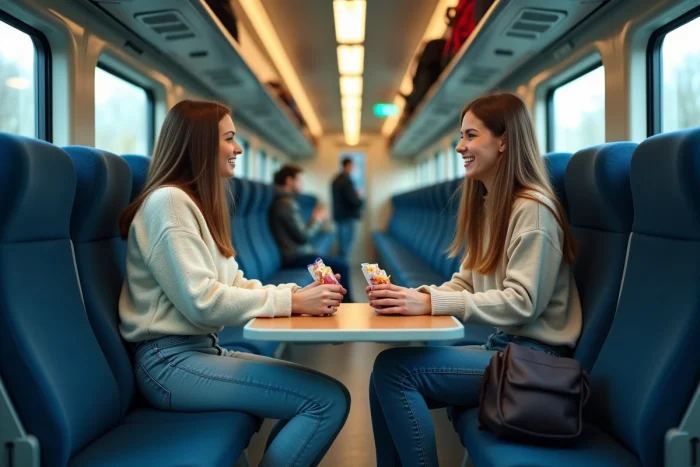
Comfort in first class TGV INOUI: what changes on board
Comfort is the primary argument in favor of first class. On a TGV INOUI, the seating arrangement changes from rows of four seats in second class to three seats per row in first class. The seats are wider, reclinable, and equipped with a headrest and a footrest.
The reduced number of passengers per car significantly alters the sound environment. First-class cars accommodate fewer travelers, which limits noise and commotion, a crucial factor for long journeys or business trips that require working on board.
Each seat has an individual table and an electrical outlet. In second class, outlets are also available, but they are sometimes shared between two seats. The precise choice of seat (car, level, isolated position or duo) is accessible from the moment of booking in first class.
Intercités and Night Intercités Trains
On classic Intercités, first class offers increased personal space with reclining seats and individual reading lights. Second class remains functional, with access to the bar and dining services.
On Night Intercités, the difference is more pronounced: first class provides access to solo or duo cabins with included bedding and travel kit, while second class offers shared cabins for four to six people, or simple reclining seats.
Carte Liberté and Avantage cards: the calculation that changes for frequent travelers
The choice between first and second class is not limited to the price displayed on a single ticket. For regular travelers, SNCF discount cards radically change the equation.
The Carte Liberté applies capped fares in both first and second class on TGV INOUI and Intercités, with total flexibility (exchanges and refunds without fees). For a professional or a frequent commuter, the actual extra cost to upgrade to first class often becomes marginal compared to the standard fare.
- The Carte Liberté caps the ticket price and offers maximum flexibility, making first class accessible to frequent travelers without disproportionate extra costs.
- The Avantage cards (adult, youth, senior) apply discounts in both classes, but the absolute gap between first and second class mechanically decreases with the discount.
- On OUIGO, the distinction does not pertain to class in the traditional sense: OUIGO Plus includes an extra bag and slightly different space, without a true equivalent of first class TGV INOUI.
Relating the annual cost of the card to the number of planned trips remains the most reliable method to determine whether upgrading to first class is worthwhile.
First or second class on TER and OUIGO: less distinct differences
On TER, first class exists on certain lines but the comfort differences are often more modest than on major lines. Seats are a bit more spaced out, areas are less crowded, and regional fares remain generally advantageous in second class. For short trips, second class is sufficient in the vast majority of cases.
OUIGO, on the other hand, operates on a low-cost model that does not offer a true first class. The OUIGO Plus option adds a bag and a few extras, but the comfort on board remains the same for all passengers. The choice between OUIGO and TGV INOUI then takes precedence over the choice of class.
When first class is truly justified
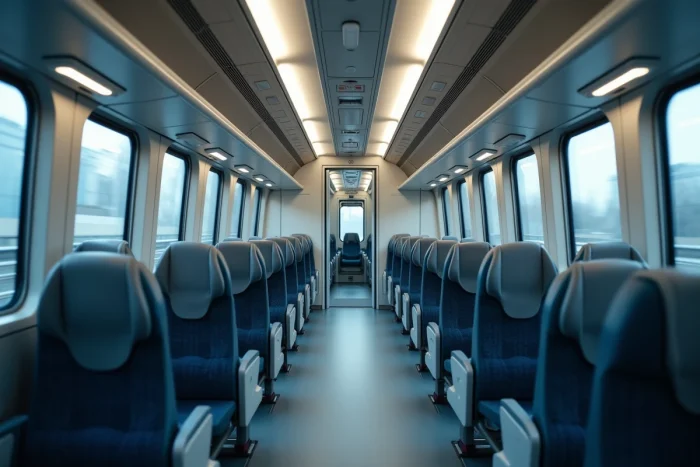
- Journeys of more than two hours where calm and space facilitate work or rest.
- Travel during peak times (school holidays, Friday evenings), where second class shows a high occupancy rate.
- Business trips requiring pricing flexibility through the Carte Liberté.
- Night journeys on Intercités, where the comfort gap between solo and shared cabins fully justifies the extra cost.
The choice between first and second class relies less on a reflex of status than on practical calculations: journey duration, frequency of travel, discount card held, and expected occupancy level. On a Paris-Lyon trip booked three weeks in advance with a Carte Liberté, the extra cost of first class can be limited to just a few euros.