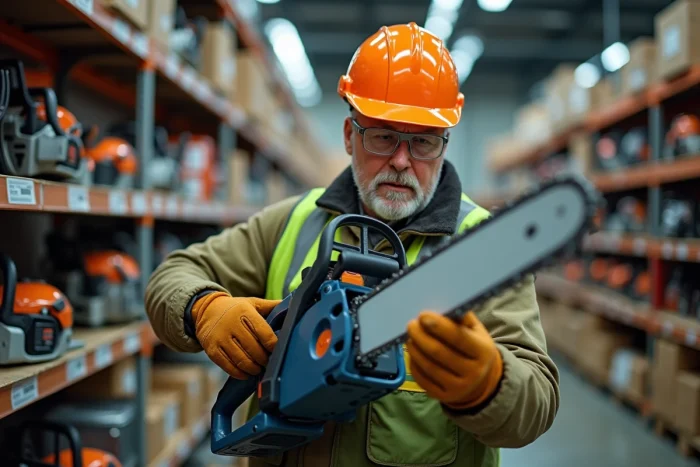
Choosing a chainsaw involves balancing three related technical variables: the motorization, the length of the guide bar, and the weight of the machine. These three parameters determine both the achievable cutting diameter, the working autonomy, and the physical fatigue accumulated over a day. Comparing these data allows you to target the model suited to your cutting tasks without over-sizing or under-equipping.
Chainsaw Motorization: Compared Technical Data
The choice between a corded electric chainsaw, a battery model, or a gas chainsaw depends on measurable parameters. The table below summarizes the differences in the criteria that weigh most heavily in the decision.
| Criterion | Corded Electric | Battery | Gas |
|---|---|---|---|
| Power Range | 1,400 to 2,400 W | Variable depending on voltage | Highest of the three |
| Average Weight | 3.6 to 5.2 kg | Intermediate | Heaviest |
| Cutting Length | 20 to 45 cm | Comparable to electric | Up to the largest bars |
| Mobility | Limited by the cord | Total (battery duration) | Total (fuel tank) |
| Noise Level | Low | Low to moderate | High |
| Emissions | None | None | Exhaust gases (2-stroke) |
| Starting | Instant | Instant | Manual starter |
The differences in weight and power between these three families are significant. A corded chainsaw weighing 3.6 to 5.2 kg can be operated with one hand for light branch trimming, while a gas model intended for felling weighs significantly more and requires sustained effort from both arms.
To delve deeper into the specifications by model and brand, the detailed sheets available on tronconneuse.xyz allow for direct comparison of Stihl, Husqvarna, or other manufacturers on each criterion of the table.
Environmental Constraints and Transition to Battery
Emission and noise standards applicable to two-stroke gas engines are gradually becoming stricter. Several municipalities and housing developments recommend, or even mandate, the use of electric or battery-powered machines for regular cutting work in residential areas.
Manufacturers like Husqvarna are openly communicating about this transition. Their recent ranges incorporate more fuel-efficient and lower-emission gas engines, but batteries are gaining ground for routine maintenance and pruning. The gas engine remains relevant when the diameter of wood to be cut or the duration of work exceeds what current batteries can provide in a single charge.
However, for an individual cutting firewood a few weekends a year, a battery model with a 30 to 35 cm guide covers most needs without the constraint of a cord or noise nuisance for the neighbors.
Chainsaw Safety: PPE and Insurance Clauses
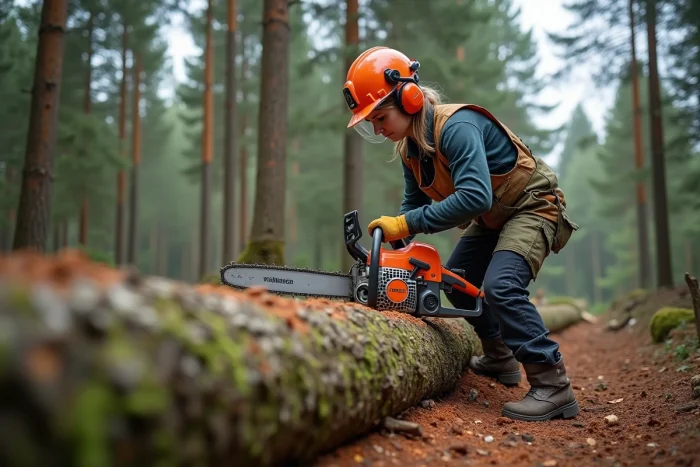
Safety when using a chainsaw is not limited to the chain brake integrated into the machine. Several home insurers require the wearing of standardized PPE to cover accidents related to the use of a chainsaw, especially for work at height.
The equipment considered mandatory in these clauses includes:
- A forestry helmet with a protective visor and ear protection, which simultaneously protects against debris, noise, and falling branches
- A cut-resistant pair of trousers made of long fibers that block the chain in case of contact with the leg
- Reinforced gloves providing a firm grip on the anti-vibration handles while protecting the hands from splinters
The absence of this equipment during a declared accident may lead to a limitation of compensation by the insurer. This trend, documented since 2022 in specialized insurance and DIY press, particularly concerns work on tall trees where the risk of falling adds to the risk of cutting.
Guide Bar and Tooth Profile: The Underestimated Technical Criterion
The length of the guide bar determines the maximum cutting diameter in a single pass. A 35 cm guide is sufficient for standard firewood. Beyond 45 cm, we enter the realm of felling medium to large diameter trunks.
The tooth profile of the chain directly influences the cutting speed and the quality of the cut. Reduced pitch chains offer finer work, suitable for precision pruning. Wide pitch chains remove more material per rotation, which speeds up the feed on softwood but generates stronger vibrations.
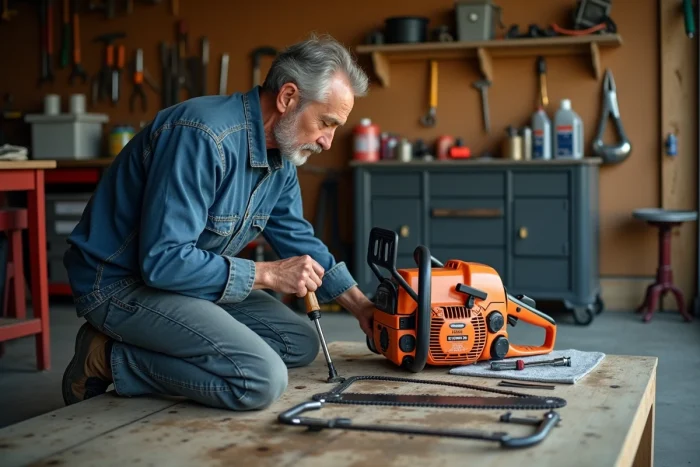
A rarely mentioned point: the chain tension should be checked every 15 to 20 minutes of active cutting. A loose chain increases the risk of derailment and accelerates wear on the guide. Recent models incorporate a tool-less tensioner, simplifying this operation in the field.
Sharpening and Chain Lifespan
A properly sharpened chain reduces the effort required from the motor and limits overheating of the guide. The most reliable sign of a dull chain: the chainsaw produces fine sawdust instead of chips. At this stage, forcing the cut prematurely wears out the entire guide bar and puts the motor beyond its optimal range.
- Sharpen after each prolonged cutting session, or as soon as the sawdust becomes powdery
- Replace the chain when the teeth reach the wear mark engraved by the manufacturer
- Alternate two chains on the same guide to distribute wear and always have a ready chain
The choice of a chainsaw hinges on the consistency between the motor, the guide, and the chain for the targeted wood diameter. A well-sized model for your actual work costs less to use than an oversized underutilized machine, whose chain and fuel unnecessarily weigh on the maintenance budget.