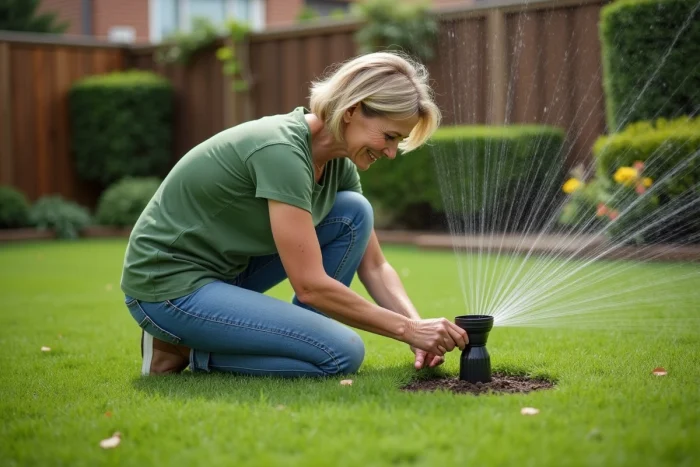
Human or dehumanized watering quickly disrupts the fragile balance of the lawn: diseases, bare roots, or water exhaustion, often for no reason. On clay soil, a single good rain nourishes several days of greenery. In sandy soil, there’s no respite: water escapes, forcing the gardener’s hand very quickly. In this story, neither ready-made recipes nor weather algorithms provide a turnkey solution. It is the soil conditions, the weather, and a bit of experimentation that shape the right rhythm.
Regulations can also disrupt habits: a municipal order is enough to interrupt a watering routine. And with a poorly adjusted automatic system, overconsumption can escalate quickly, with no positive effect on the lawn.
Why the ideal amount of water depends on your lawn and its environment
Watering without considering the specifics of the terrain is like sowing blindly. Soil composition, grass variety, lawn size, and nearby environment all play a role. Clay soil retains water; sand, on the other hand, requires shorter and more frequent applications to avoid wasting what seeps in so easily.
To adjust the amount of water, you need to focus on specific criteria:
- Root depth: If the grass has shallow roots, it requires water more often. The deeper the roots go, the more you can space out the watering.
- Exposure and weather: A lawn in full sun or exposed to the wind loses moisture much faster. In the shade, the grass’s thirst is less pronounced.
- Area to be watered: Between the general rule of 10 to 15 liters per square meter each week and reality, there are the weather and soil texture to adapt.
No cheating is possible: observing, testing, correcting is the key. For those who want to go further with field data and tips from experienced gardeners, just learn more on Clic Garden. In the long run, it is the precision of your observation that will make the difference, not a universal recipe.
How to know if you are watering too much, not enough, or just right?
Watering is about hitting the mark. Too much water, and the grass suffocates. Not enough, and it wilts. Between the two, a few concrete signs guide you.
- Lawn condition: A soft, dense green indicates a hydrated lawn. Soft, dull, or flattened blades: the lack of water is showing. Conversely, a lawn that is soaked and sticky underfoot is often overwatered.
- Touching the soil: Push a finger, stick, or screwdriver about eight centimeters deep. If the soil sticks and shines: patience. If it crumbles, the lawn is waiting for another watering.
- Roots: Roots that are stunted at the surface indicate watering that is too short or too frequent. If they go deep, the grass will better withstand heat or drought.
Beware of the zenith sun: watering during hot hours can burn the lawn. Prefer cool mornings or early evenings for gentle irrigation. The weather dictates the tempo: a shower, and watering waits. Dry period? Only the signals from the ground will decide, not the calendar.
To check water distribution, place several cups or containers on the lawn before watering. After a cycle, check if the level is even. Any discrepancies? Just adjust the placement or orientation of the sprinklers.

Concrete tips for effective, smart, and eco-friendly watering
Want to dose the water just right? Test the actual flow of your system: place several identical containers on the lawn, then start watering for an hour. Add up the collected volumes and adjust future durations based on the area. This simple check often reveals excesses that were previously unsuspected.
Watering when evaporation is at its lowest, early in the morning or in the evening, makes every drop last. Water restrictions are becoming more common, and collecting rainwater in a tank is no longer an option: it is a necessity to anticipate the dry seasons ahead.
Here are some gestures that make all the difference for more thoughtful watering:
- Raise the mowing height: taller blades shade the soil and retain moisture better.
- Aerate the lawn in spring and fall: this way, water infiltrates faster and benefits the roots more.
- Divide each watering into two close passes rather than one: you limit runoff and boost absorption.
Between equipment, soil nature, and weather, the key lies not in a miracle number but in the ability to adapt, observe, correct, and start over season after season. Nothing beats the gardener’s eye, learning from every shower and every sunny spell, so that the water poured helps the lawn grow with as much accuracy as responsibility.