
In 2023, an algorithm won a Scrabble tournament against several national champions. The rules established for decades had never anticipated this type of opponent. Regulatory bodies are now questioning the validity of scores produced by artificial intelligences, and the fairness in comparison to human players.
Some online gaming platforms are already integrating AI systems to detect strategies deemed irregular, sparking debates about the very definition of cheating. The lines are moving quickly, much faster than official regulations can adapt.
When artificial intelligence revolutionizes word games and entertainment
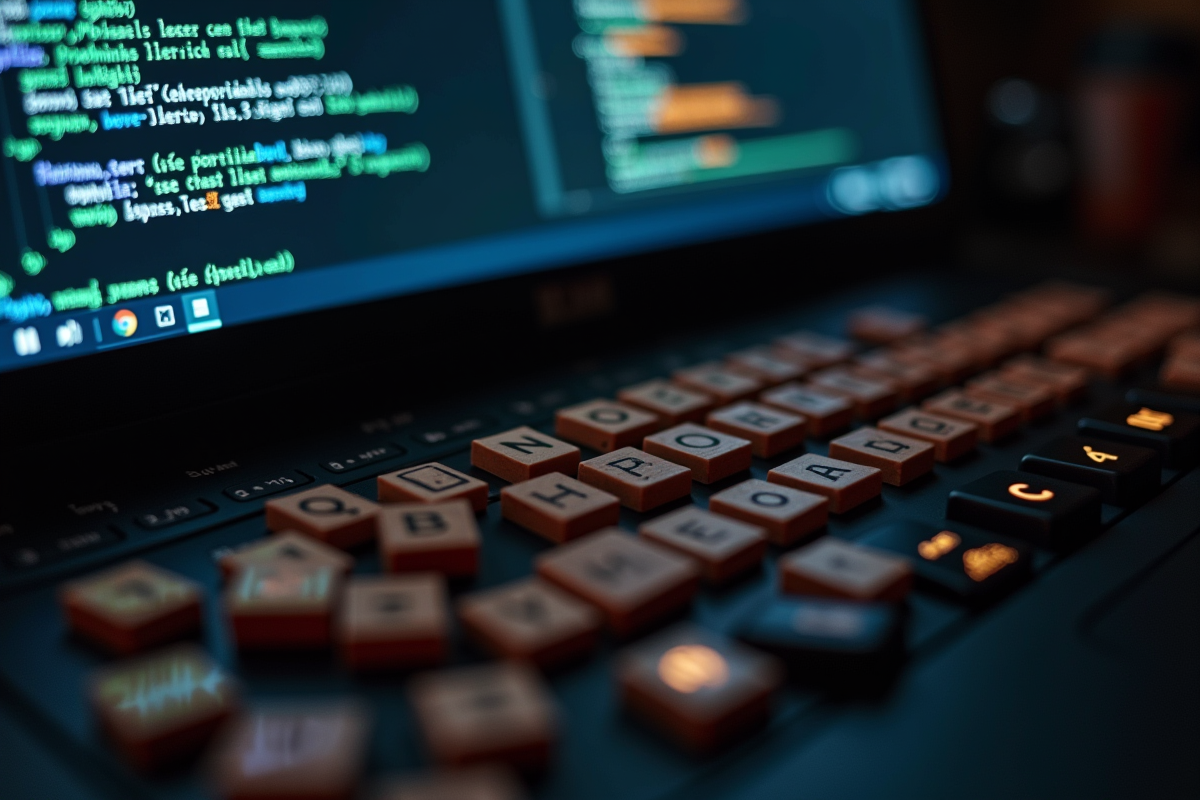
The emergence of artificial intelligence in word games is anything but anecdotal. In just a few years, digital platforms have welcomed into the arena language models of formidable precision. Whether in Paris or the most remote countryside, competition has been enriched by tools capable of anticipating, learning, and surprising even in the most contested games. Neural networks, fed by millions of games, guess improbable words, explore forgotten combinations, and expand the boundaries of the game.
Machine learning, with its abundant variants, reinforcement learning, procedural generation, renews the joy of playing. Players see unprecedented proposals emerge, and the most curious experiment with new strategies, inspired by these intelligences that never tire. Tools derived from deep learning no longer just assist participants: they transform the experience. Gigantic learning databases feed architectures like the Transformer, a pillar of GPT and ChatGPT from OpenAI. These models juggle prompts, tokens, embeddings, adjust their behavior in real-time, generate surprising grids, and expand everyone’s vocabulary.
In the wake of these innovations, video games are not left behind. Procedural level generation, dynamic difficulty adjustment, and personalized pathways are now part of the landscape. For word game enthusiasts, new benchmarks are emerging, including the Cementix index. Learning to read these signals becomes an asset to refine one’s strategy. This mutation reshuffles the cards of entertainment and already raises questions about the role of humans in the face of systems capable of inventing, learning, and pushing established limits.
Challenges, opportunities, and ethical questions: AI at the heart of our digital leisure
The breakthrough of artificial intelligence in word games and algorithms does not come without raising multiple debates. While there is real enthusiasm for these models capable of generating unexpected words or grids, one must also contend with a more ambiguous reality: biases. Behind every suggestion, every algorithmic stroke of genius, there are human data, imperfect, sometimes stereotyped, sometimes incomplete. This gives rise to errors, approximations, and offbeat responses, amplified by the very mechanics of machine learning.
The phenomenon of “digital consanguinity” is increasingly concerning: when AI trains on content generated by other AIs, diversity diminishes and the risk of going in circles grows. To counter this uniformity, techniques like watermarking are emerging to identify content created by models, detect deepfakes, and limit misinformation. RAG (Retrieval Augmented Generation) attempts another approach: it feeds models with fresh, external, updated information.
Here are the main questions now entering the debate around AI and gaming:
- Privacy: the collection and use of personal data during online games raise strong expectations regarding protection.
- Regulation: the European AI Act is beginning to outline a framework, with rules adapted according to the level of risk associated with AI applications.
- Education: providing everyone with the keys to understand how these technologies work and their limitations, to enable informed and enriching practice.
The uncanny valley and Moravec’s paradox remind us that, even at the heart of the most sophisticated technology, a gray area remains: fascination, suspicion, caution. Video games, learning platforms, content generators, all these innovations pose the same underlying question: how far will we allow the algorithm to guide our pleasure in playing? The game, itself, is just beginning.