Foreign cards are not allies when dealing with daily life in Morocco. In Marrakech or in a mountain village, many businesses, taxis, or vendors operate at their own pace: that of cash. No payment terminals, no mobile payments to the rescue when the need for cash arises, even in some high-end tourist spots where cash payments are required beyond 50 euros. Add to that banks that charge withdrawal fees at their discretion depending on the ATMs, and you are faced with the simple risk of finding yourself without a solution at the wrong time.
Why cash remains the key to a hassle-free stay in Morocco
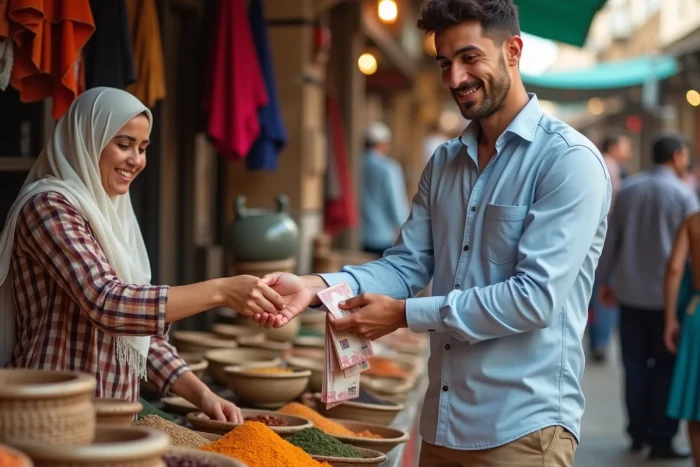
It is impossible to ignore this reality: without cash, traveling in Morocco quickly becomes a series of refusals. In the bustling souks, along the Atlantic coast, from Casablanca to Essaouira, exchanges are made hand to hand. Taxis are paid in dirhams, small pleasures at the terrace, the clay jug or the basket of spices. Payment terminals, when they exist, only concern large brands and hotels of a certain category.
Mobile payment experiments exist, but the local reflex remains cash. For a quick meal, a tip slipped after a ride, a service rendered: only cash opens doors without friction. The customs are ingrained, trust is built through immediate payment. Having a bit of cash avoids sterile exchanges or the boredom of facing a merchant who is helpless in front of your card.
The dirham (MAD) is the cornerstone of daily life in Morocco. From colorful markets to transportation, everything is paid for as it used to be. Skipping cash means risking a blockage for obvious purchases, sometimes even depriving yourself of a hotel night.
Knowing how to manage your cash and adapt your budget to this context ensures peace of mind from departure to arrival, without unpleasant surprises when it’s time to settle the bill.
How much cash to have on hand? Some practical guidelines based on your stay
No one travels the same way or has the same habits for paying in cash in Morocco. For a few urban days or a trip to the desert, the cash envelope should follow your needs and desires. A more organized city trip will require less money than an adventure on secondary roads improvising accommodation and meals.
Daily budget ranges
As a guideline, here are amounts suited to each type of traveler:
- For those who prefer small addresses, taxis, or shopping in the souks, counting 250 to 350 Moroccan dirhams (about 23 to 32 euros) per day is usually sufficient.
- If you want comfort, entering more refined restaurants and enjoying guided tours, it’s better to adjust around 400 to 600 MAD per day.
- And in case of repeated purchases or a desire for human interactions fueled by bargaining, having some small bills will prevent you from running short.
The question of tips comes up constantly on the road: taxi drivers, porters, guides all expect a nice gesture. Timeless, a coin or a small bill avoids awkwardness or misunderstandings; nothing is simpler with cash in your pocket.
For a week of discovery, most travelers navigate with 1,500 to 2,500 dirhams in reserve, if accommodation is already paid. Changing euros into MAD is not a problem in the city. But as you venture deeper into the country, it’s better to keep enough local currency on hand to avoid finding yourself without recourse.
Exchanging money and withdrawing in Morocco: simple tips to avoid pitfalls
No question of arriving with pockets full of dirhams: the currency does not circulate outside Morocco. Everything starts on-site, where, as soon as you land, converting an initial amount at airports, centers in Marrakech or Rabat, or hotels proves to be the safest option. Exchange offices display rates clearly and avoid surprises. It is impossible to really go wrong by using these official players.
Large Moroccan banks also exchange your currencies, all with formalities: passport to present, more detailed questionnaire in case of a large sum. Withdrawing cash directly from an ATM is possible with most foreign cards, provided you check in advance the fees your bank will charge for international withdrawals.
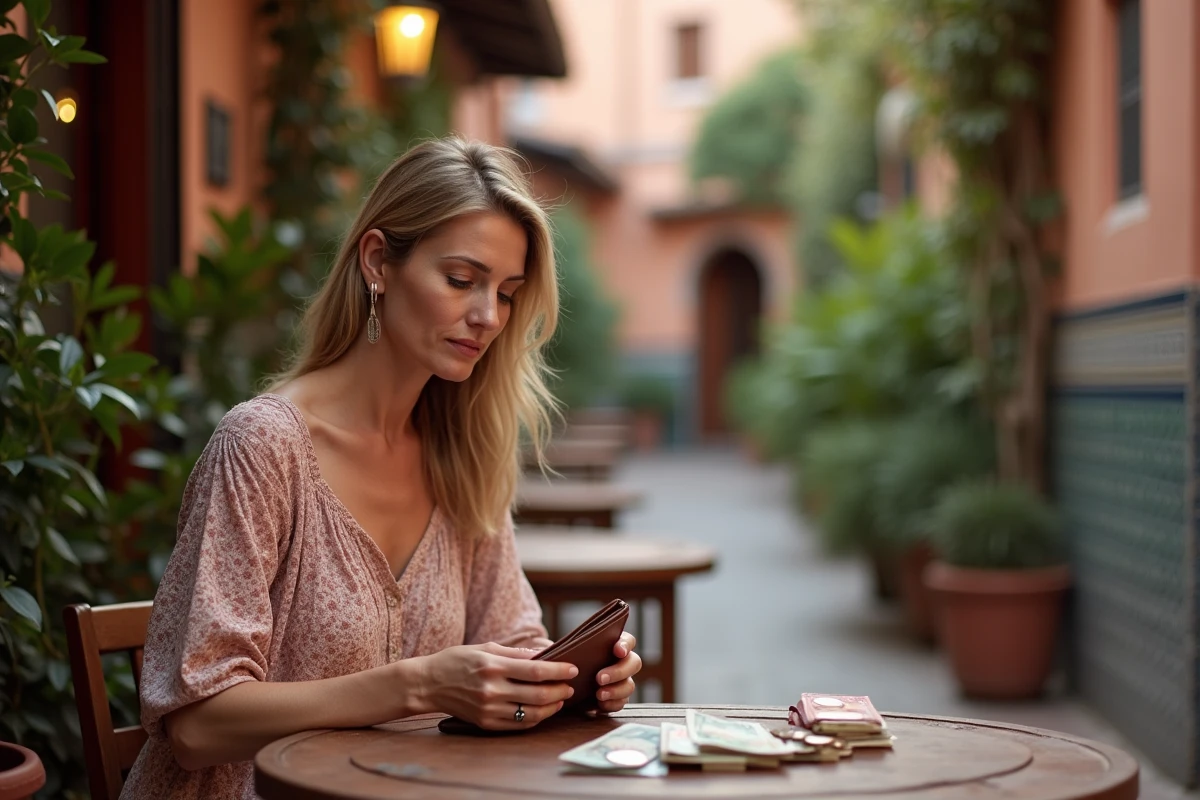
To keep control, prefer moderate withdrawals. It is better to limit the amount on hand and split the operations than to walk around with an overloaded wallet. Use cash to pay for taxis, daily meals, or purchases in markets, where cards are systematically disregarded. Even in urban hotels or restaurants, the certainty of a card payment sometimes feels like a gamble. Taking the time to compare exchange rates from one office to another and refusing any transaction outside official channels is the best way to secure your exchanges.
Traveling in Morocco also means adjusting to this unwritten rule of cash. A habit to embrace, and an opportunity to feel a little less like a visitor, a little more part of local life with each bill exchanged.